
From Ferret Scout Cars to Film Sets: How the Canadian Tank Museum Became a Powerhouse of Military History and Film Production
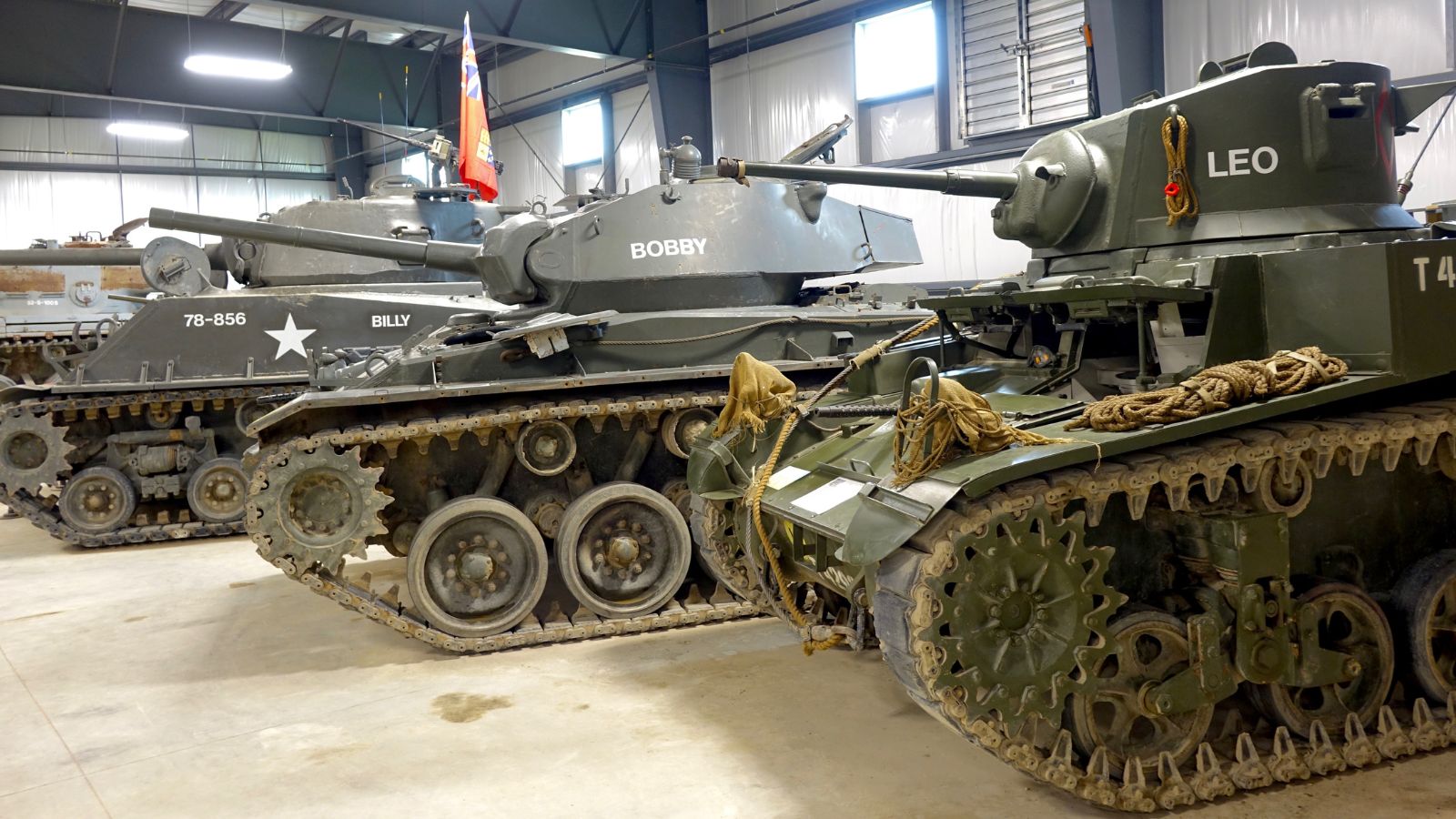
Few museums can claim to preserve history, bring it to life and help create it on screen. The Canadian Tank Museum in Oshawa has accomplished all three. What began as a small group of dedicated veterans determined to preserve their regiment's identity has evolved into Canada's largest operational military vehicle collection and the largest of its kind in North America. Along the way, the museum has become a trusted partner to the film and television industry, supplying vehicles, expertise, props and historical authenticity to productions for more than four decades.
Built on Passion, Not Resources
The museum's story begins not with a building, but with a group of soldiers and veterans known as the Ontario Regiment Ferret Club.
Following the loss of the Ontario Regiment's tanks after the Second World War, members sought a way to preserve and showcase their regimental heritage. The solution came in the form of nine Ferret scout cars, retired military reconnaissance vehicles purchased through the dedication and personal financial contributions of supporters. At the time, each vehicle cost approximately $8,000. Because the regiment could not purchase them directly, individuals stepped forward and invested their own money. Among those involved was Rick Spratley, then serving in the Canadian Armed Forces, who personally selected the best nine vehicles available. Three were painted in regimental colours while the remaining vehicles served as escorts and support vehicles.
As the collection grew, so did the challenges. Storage became increasingly difficult, and volunteers devoted countless hours to maintaining and restoring the vehicles. Ken Lee joined the effort in 1980 and remembers the challenges of those early years.
"There was no museum," he says. "The Ferret Club was the beginning of the museum."
The collection moved several times before finding a more permanent home. A major relocation in 1990 took nearly a year and required 2.5-ton trucks to transport tanks and artifacts. The effort was driven almost entirely by volunteers operating on what the museum’s Executive Director, Jeremy Blowers describes as a "shoestring budget" fueled by passion rather than resources.
At the same time, the Oshawa Armoury had run out of storage space for growing collections, while a small military museum at Parkwood National Historic Site faced similar limitations. Those collections were eventually merged, bringing together the Ferret Club, the Ontario Regiment RCAC Museum, and the Oshawa Aeronautical, Military and Industrial Museum (OAMIM). The result was the official opening of the Canadian Tank Museum in 1993.
Looking back, Jeremy describes the coming together of the three organizations as "a historical accident," but one that would ultimately create a nationally significant institution.
Growing Into North America's Largest Operational Collection
Securing a semi-permanent home gave the museum room to expand. Growth came steadily through donations, purchases, recoveries of abandoned equipment and thousands of volunteer restoration hours.
The collection has grown to include more than 157 pieces of military equipment and artillery, with over 50 armoured vehicles ranging from main battle tanks and armoured personnel carriers to scout cars, engineering vehicles, military trucks, motorcycles, artillery pieces, cannons and a vast assortment of military shelters, radios, tents, and production props.
The museum’s entertainment industry legacy dates to 1982 and the filming of David Cronenberg’s the Dead Zone, starring Christopher Walken. At the time, productions operated on much smaller budgets, and the museum was entirely volunteer run. Volunteers frequently took time off work to transport vehicles to Toronto-area shoots, often receiving little more than meals in return.
A major turning point came in 2014 with the release of the film, Fury, starring Brad Pitt. The museum supplied vehicles and support for the production, and because it owned two examples of the Sherman tanks featured in the film, Sony Pictures relied heavily on the organization for North American promotional activities.
The impact was immediate. National media attention followed through television appearances and interviews, while numerous news organizations filmed segments at the museum. What had long been considered one of Durham Region's hidden gems began earning recognition far beyond the region.
The film industry suddenly became aware of what Oshawa, and the surrounding areas had to offer.
According to Jeremy, Fury "blew it wide open."
The resulting growth enabled the museum to hire its first full-time employee in 2016, creating dedicated capacity to manage production inquiries and industry relationships.
Educational programming evolved at the same time. What began as “Tank Talks” gradually grew into larger public events before becoming today's popular Tank Saturdays, which feature operating vehicles, demonstrations, pyrotechnics, and immersive living-history experiences. Partnerships with local businesses, caterers, and the Oshawa Executive Airport have further strengthened the museum's role as both a tourism destination and film industry resource.
More Than Forty Years in Film
Projects have varied in terms of scope and scale. A museum favourite? A James Bond-inspired 7-Up commercial featuring a tank chasing a young thief on a bicycle. During the 1990s, Thanks to a Grateful Nation rented approximately 30 museum vehicles generating about $70,000 in revenue, while more recent productions such as The Handmaid's Tale required 18 vehicles for a single episode. The museum has also spent two years supporting the production of IT: Welcome to Derry.
Ken Lee, who spent roughly four decades volunteering before joining staff, estimates the museum has supplied more than 150 vehicles to film and television productions over the years.
Revenue generated from these productions has always been directed back into the museum’s charity, helping fund preservation, restoration, acquisitions and educational programming.
Preserving Authenticity on Set
The museum's involvement in film and television production goes far beyond renting out vehicles.
Museum personnel accompany production staff, operate equipment, provide maintenance support and ensure historical accuracy by providing guidance on uniforms, weapons handling, equipment usage and military procedures. Many operators are military veterans or highly experienced civilian specialists with extensive expertise in historic military vehicles.
The museum is selective about the projects it supports.
"We would never embarrass the soldiers or the history," Jeremy explains.
As a registered charity focused on military heritage, the organization avoids projects that are hateful, offensive, politically partisan or inconsistent with its educational mandate. Maintaining public trust and historical integrity remains a priority in every partnership.
A One-Stop Shop for the Film Industry
Today, the museum is recognized throughout the film industry as a comprehensive military-production resource. Its services extend well beyond supplying vehicles. Productions regularly rely on the museum for military props, communications equipment, radios, historical consulting, military training for actors, technical expertise, and location support. The museum has developed a reputation for being able to provide not only equipment, but the knowledge required to use it accurately.
The museum works closely with picture-car companies, production designers, and film industry databases that track surviving military vehicles worldwide. Many film researchers discover the museum through military vehicle networks and historical databases used to locate authentic equipment.
According to Jeremy, the organization's strength lies in its ability to provide a comprehensive range of services and expertise under one roof:
"Within the military sphere, we are a one-stop shop."
Working closely with Oshawa Executive Airport’s Manager Stephen Wilcox, the museum also helps productions access airport facilities, hangars, staging areas and open spaces ideal for military-themed filming.
Jeremy credits Wilcox's industry experience and support for helping attract productions to both the airport and museum.
The partnership benefits filmmakers by providing access to a broad range of filming environments while generating economic activity throughout Durham Region. Together, the airport and museum have created unique opportunities that would be difficult to replicate elsewhere in the Greater Toronto Area.
Looking Ahead
The rest of 2026 is shaping up to be a busy one for the museum.
Support for an upcoming DRIFF in a Jiff event reflects an ongoing commitment to strengthening ties between film, tourism, community organizations and military heritage groups. Jeremy sees the event as a valuable opportunity to promote Durham Region while building partnerships that benefit everyone involved.
Recent growth demonstrates the impact of those efforts. The museum has completed a $2.5 million expansion, added a new $60,000 vehicle storage facility and continued to receive donations of rare military vehicles from private collectors who want them preserved and shared with future generations. Film industry revenue has played a significant role in supporting acquisitions, restorations and preservation projects that might otherwise be impossible.
One ambitious project planned for 2028 will involve a complete vehicle disassembly, restoration, repainting and reassembly over a period of at least three years. The process will be documented as a YouTube series and is expected to involve a core team of six to eight volunteers working consistently throughout the restoration.
"You can't rush it," Jeremy says. "It has to be done right."
At its core, however, the museum's mission remains unchanged.
Whether restoring a century-old vehicle, supporting a Hollywood production, hosting a community event or introducing a child to military history for the first time, the organization remains committed to telling the stories of the Canadians who served.
What started as nine Ferret scout cars purchased by passionate veterans has become one of the most unique military museums in the world, proving that history is most powerful when it is not simply preserved, but brought to life.