
Snooze Room creates calm in Durham by supporting sensory wellness
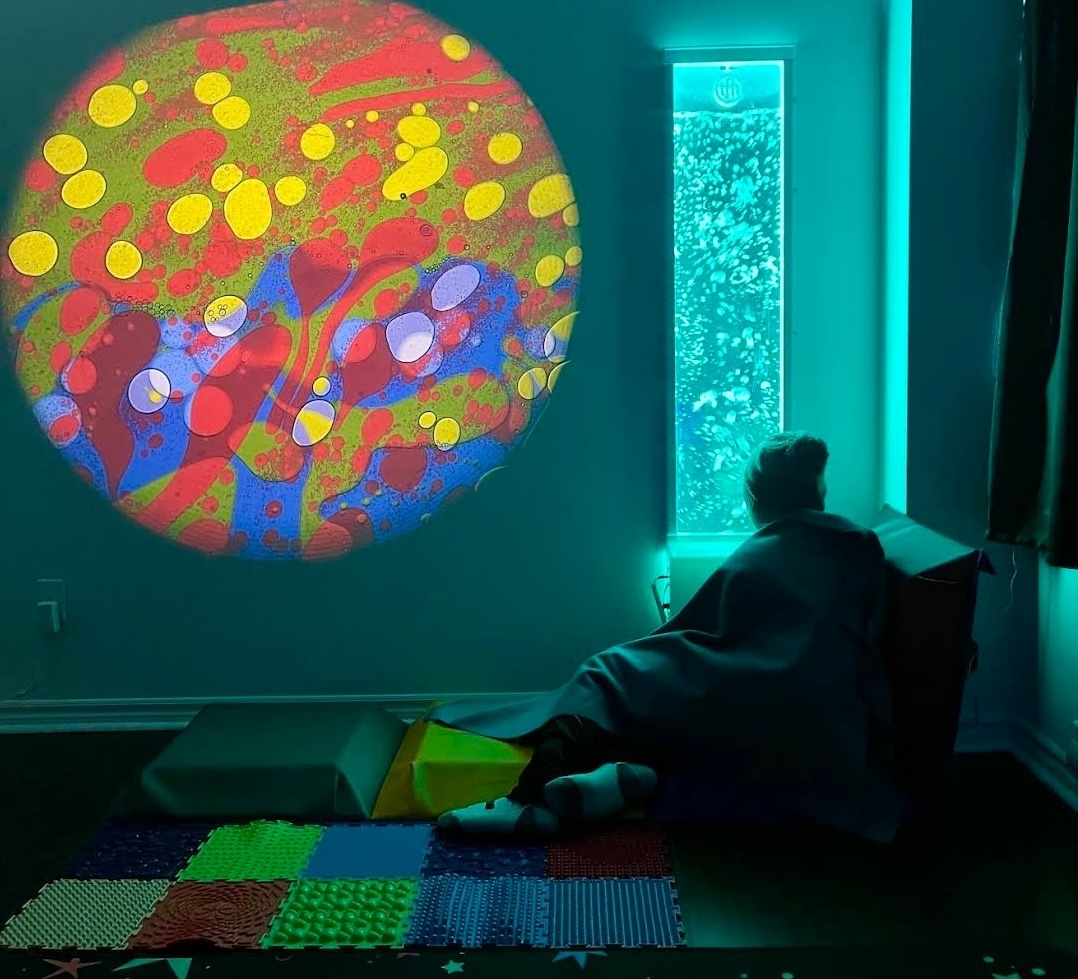
In a world that can often feel loud, overstimulating and fast-paced, Melanie Banfield, founder of Pickering’s Snooze Room, offers something increasingly rare: a place where people of all ages can slow down, self-regulate and take a breath.
“Being overstimulated daily is common,” Melanie explains. “However, when you walk into the Snooze Room, you automatically feel like, ‘Okay, I can relax here. I can shut my mind off here. I can just kind of be safe here.’”
What is Snooze Room?
Snooze Room is a multi-sensory environment inspired by Snoezelen therapy, an approach developed in Europe in the 1970s that uses calming lights, sounds, textures and movement to help regulate the nervous system. While sensory rooms are common in many parts of Europe, Melanie says the concept is still relatively new in Canada, especially in public spaces that are open to people of all ages and abilities.
Melanie’s journey to create Snooze Room began through years of working with children and adults with disabilities, first in schools and later in community settings. Alongside her husband, a social worker who supports youth with mental health challenges, she saw firsthand how difficult it could be for families to access sensory-friendly spaces outside institutional settings.
“You can’t just go to a hospital or a school and ask to use their sensory room,” she says. “We realized there were no public sensory spaces where people could come and access that type of support.”
Today, Snooze Room welcomes people of all ages and abilities. Its sensory spaces are designed to support everyone, from children and adults with autism, Attention Deficit Hyperactivity Disorder (ADHD), developmental disabilities, sensory-processing challenges, mental health needs, dementia, to anyone who may benefit from a calming and inclusive environment.
Snooze Room is therapy, not a playroom

Rooted in neuroscience, Snooze Room serves a therapeutic purpose, not simply as a space to play or relax, Melanie points out. She believes this distinction is critical, as people should access the sensory environment primarily to help self-regulate.
“We hear people say, ‘Oh, my kid gets to go to the sensory room if they behave.’ There's a different conversation that needs to be had. The child needs to go to the sensory room first to help self-regulate, and then they can do other activities. It's not the other way around. It's not a treat; it's therapy.”
Melanie challenges the common misconception that sensory spaces are only for children or primarily for play. Instead she positions Snooze Room as a necessary wellness resource for anyone who needs a break from sensory overload. Students visit before exams to calm their minds, parents to decompress and adults to manage stress and mental health challenges.
“It forces you to stop,” she explains. “There’s so much research on self-regulation and nervous system support. Sometimes people don’t even realize how much they need that until they experience it.”
Creating inclusive spaces
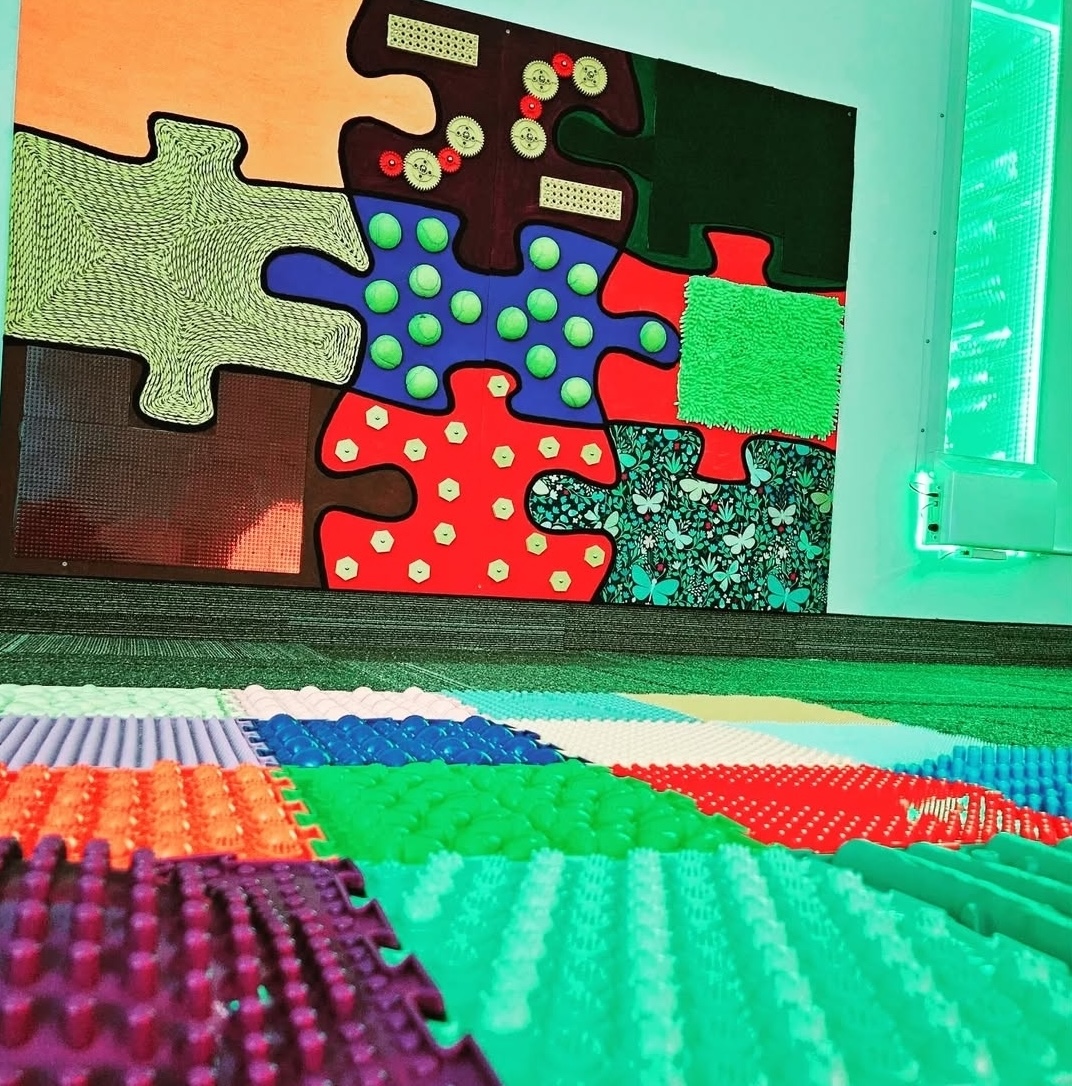
The space is about more than relaxation. It’s about accessibility, inclusion and creating a sense of belonging. “We’ve had families who have never hosted birthday parties outside their home before because traditional play spaces were too overwhelming for their child,” she says. “Here, they feel like people are coming into their child’s world instead.”
That inclusive approach is intentional. Each room is designed with different sensory needs in mind, from lighting and sound controls to varied seating options and tactile experiences.
“It’s one thing to say you’re inclusive,” Melanie notes. “It’s another to actually build spaces where people truly feel comfortable and supported.”
She believes public understanding of sensory wellness and mental health is slowly shifting. More people are becoming comfortable discussing emotional regulation, sensory needs and nervous system support, but much more awareness is still needed. “People see the pictures and think it looks cool,” she says. “But until you actually come into a sensory room, you don’t understand the feeling of it.”
Passionate about serving her community
As an entrepreneur, Melanie admits the journey hasn’t always been easy, but she continues to move forward. Snooze Room recently celebrated its third anniversary and while there have been challenging moments, the community response continues to motivate her. “When I see families travelling from Kingston or London to come here, or parents coming in saying this space changed something for them, I know I’m doing the right thing,” she says.

Melanie grew up in Durham Region and remains passionate about serving the community she calls home. Snooze Room has received growing recognition locally, including multiple Consumer Choice Awards and an upcoming business award from the City of Pickering.
Looking ahead, Melanie is already preparing to launch a second business connected to the sensory wellness space, though details are still under wraps. For now, her focus remains simple: creating spaces where people feel calm, supported and understood.
“My hope,” she says, “is that people always feel better leaving the Snooze Room than before they came.”
Snooze Room is open Monday through Sunday, typically from 10 a.m. to 6 p.m., with flexible hours. Saturdays feature therapeutic partnerships where other wellness providers offer services on-site. All visits require booking, with no walk-ins permitted. For more information, visit Snooze Room.
Innovation and Inclusivity: Stories from Durham Region's Black Business Leaders, Entrepreneurs, and Professionals (members of DRABPE) is a series of stories about thriving Black professionals choosing to do business in Durham Region.
Submission by DRAPBE (Durham Region Association of Black Professionals & Entrepreneurs)