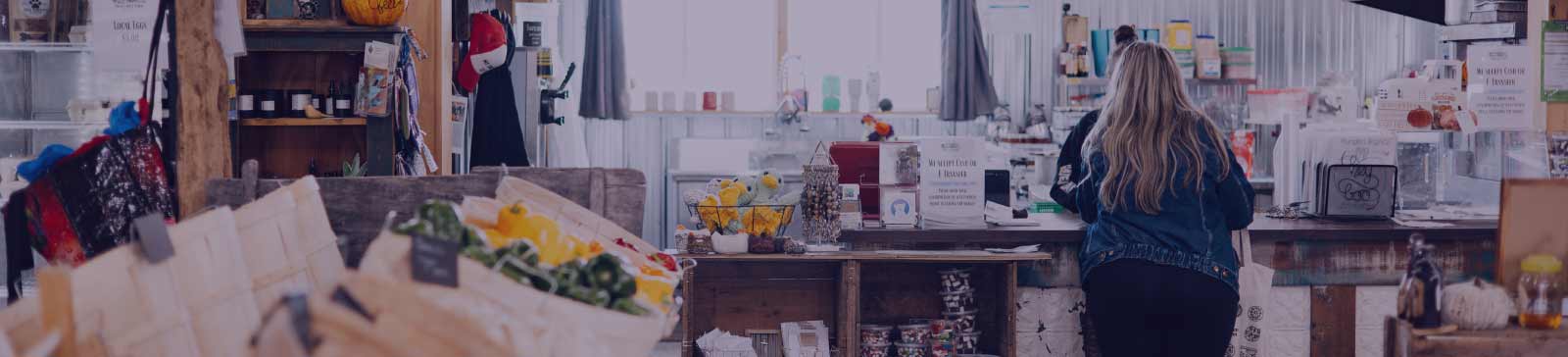





The Townships of Scugog, Uxbridge and Brock (North Durham) in collaboration with the Region of Durham, are seeking to encourage agriculture-related and on-farm diversified uses. This includes update policies and processes that will help farmers explore new income potential in prime agricultural areas.
Getting started
Thinking of diversifying your farm in North Durham? Reach out to Economic Development staff at agriculture@durham.ca to get started. They can help explore your project idea and point you in the right direct.
More information can also be found in the North Durham Agriculture-Related and On-Farm Diversified Uses – Application Toolkit. It outlines what you can expect, requirements for your project and resources.
Once you’ve read the Application Toolkit, Economic Development staff can help you complete a Checklist to determine next steps for your project. If you haven’t yet, please reach to agriculture@durham.ca to get started.
Related documents
-
North Durham Agriculture-Related and On-Farm Diversified Uses Study- Executive Summary [Coming Soon]
Frequently Asked Questions
| What are Agriculture-Related and On-Farm Diversified Uses? |
| Agriculture-Related Uses are farm-related commercial and farm-related industrial uses that are directly related to farm operations in the area, support agriculture, benefit from being in close proximity to farm operations, and provide direct products and/or services to farm operations.
On-Farm Diversified Uses are secondary to the principal and established agricultural use of the property and are limited in area. On-farm diversified uses include, but are not limited to, home occupations, home industries, agri-tourism uses, uses that produce value-added agricultural products, and electricity generation facilities and transmission systems, and energy storage systems. |
| What are examples of activities considered Agriculture-Related and On-Farm Diversified Uses? |
| Agriculture-Related Uses: farm gate sales of locally produced agricultural products, produce storage and distribution, agricultural research centre, winery using mostly local grapes, cidery using local fruit, grain storage and drying for multiple farmers, flour mill for local grain, livestock stockyard or assembly yard, farm equipment repair shop, and more.
On-Farm Diversified Uses: home Industries (workshops, welding, wood working, etc.), café/small restaurant, food store (ice-cream, bakery, cheese, etc.), home occupations (bookkeeping, hairdressing, art studio, etc.), retail uses (farm market, tack shop, antique business, etc.), agri-tourism uses (bed and breakfast, petting zoo, hay rides, etc.), value-added uses (processing, packaging, bakery, etc.).
Please see pages 16 and 23 and 25 to 27 of the Guidelines on Permitted Uses in Ontario’s Prime Agricultural Areas for examples of these uses. |
| I have an idea for an agriculture-related or on-farm diversified use but not sure where to start. What should I do? |
| Durham Region Economic Development can help you explore your idea in more detail, develop a business plan and work through next steps to take your idea to the next level. Reach out to agriculture@durham.ca for support. |
| Can on-farm diversified uses replace farming as the main activity on the property? |
| No. Farming must remain the primary use of the property. On-farm diversified uses are always secondary to agriculture. |
| How big can an on-farm diversified use be? |
| On-farm diversified uses are meant to be small in scale. They must be secondary to the primary farming operation and fit appropriately within the rural setting and surrounding agricultural community. On-farm diversified uses can use no more than 2% of the farm parcel up to 1 hectare total, whichever is less. Buildings used for on-farm diversified uses must not exceed 20% of the permitted area, with a maximum of 2,000 m². |
| What if I already have one on-farm diversified use and want to add another on the same farm parcel? |
| The 2%- or 1-hectare maximum area applies to all on-farm diversified uses on your farm combined. |
| How does this support farmers? |
| On-farm diversified use policies are intended to support farmers by creating new income opportunities to support the economic viability of farms; this also supports the broader rural economy while also protecting agricultural land. As a result, any applicants for on-farm diversified uses will be asked to verify that they have a Farm Business Registration Number (FBRN). If they are unable to obtain an FBRN, applicants can seek an exemption from Agri-Corp. |
| Why do I need to apply for my on-farm diversified uses project? |
| Municipalities oversee on-farm diversified uses to ensure they align with Provincial recommendations which are to support farming and rural character, don’t take away from productive farmland, and don’t negatively impact neighbours, traffic, or the environment. |
| Can I run a non-farm business on my agricultural property? |
| Only if it qualifies as an on-farm diversified use or agriculture-related use and remains secondary to farming. Large-scale or commercial/industrial businesses that are not farm-related and large-scale recurring events with permanent structures are not permitted in agricultural areas. As per provincial policy, these uses are to be located in settlement areas or urban areas. |
| What if I rent or lease farmland — can I still apply for an on-farm diversified use? |
| You need to be the primary farmer, with a valid FBRN or have an exemption from Agri-Corp, to apply for an on-farm diversified use. |
| Do I need a professional (e.g., planner, consultant, engineer, etc.) to help with my application? |
| Not always. Simple applications may only require a site sketch and basic forms. However, larger or more complex projects may need technical studies (traffic, environmental, etc.), where professional help can save time and prevent mistakes. |
| How much does it cost to apply? |
Costs vary by township and the complexity of your project. You may need to budget for:
|
| What is a conceptual site plan, and why do I need one? |
| A conceptual site plan is a simple drawing showing how your proposed business will fit on your farm. It usually includes building locations, driveways, parking, landscaping, and services (like septic or wells). Municipal staff use it to understand your proposal and check if it fits local rules. |
| What does “maximum permitted area” mean for on-farm diversified uses? |
| This is the limit on how much land you can dedicate to an on-farm diversified use. It includes buildings, driveways, parking, landscaping, and services. For on-farm diversified uses, you can use no more than 2% of your total farm lot, up to 1 hectare. |
| Can I expand my on-farm diversified use over time? |
| Yes, but the total area for all on-farm diversified uses combined must stay within the limits (2% of lot area, up to 1 hectare). |
| Do I need to meet accessibility standards? |
| Any development associated with your business idea is subject to the requirements of the Accessibility for Ontarians with Disabilities Act (AODA). You are encouraged to further discuss this with the Township where you are located to understand what considerations will need to be made when planning your business idea. |
| What if my business idea involves hosting events? |
| Special events may be allowed, but you must follow Township event by-laws and zoning by-laws. This may include permits for gatherings, noise limits, parking requirements, and emergency access. |
| Do I need to think about Minimum Distance Separation (MDS)? |
| If your application includes on-farm accommodations, MDS will be applied meaning they must be erected at a distance from existing livestock barns and manure storage to prevent conflicts. Township staff can assist with the application of MDS to on-farm accommodations. |
| Who makes the final decision on my application? |
| The Township is the final approval authority, based on policies from the Province, Region, and local by-laws. |


