
Inside Tetra Tech’s Clean Energy Expansion
California-based Tetra Tech didn’t arrive in Durham Region by accident; it came for the proximity to market, talent, and momentum: but stayed because all three are accelerating.
As Director of Engineering for Tetra Tech’s Canadian Nuclear Unit (CNU), Mark Browne sums it up plainly: “We chose a while back to focus a lot of our efforts here in Ontario, because of the nuclear industry that is just exploding here right now.”
From their Canadian home-base in Pickering, Tetra Tech serves utilities like the Pickering, Darlington, and Bruce Nuclear Plants, and national projects from Port Hope to Point Lepreau. Being in the heart of Durham Region, the CNU team is geographically positioned where decisions can easily turn into designs and field work. Browne’s daily view says it all: “Having a local presence here in the Durham Region just makes it easy to have direct access to our clients. I can actually look out my window and see the Pickering plant that a lot of our folks are working on right now.”
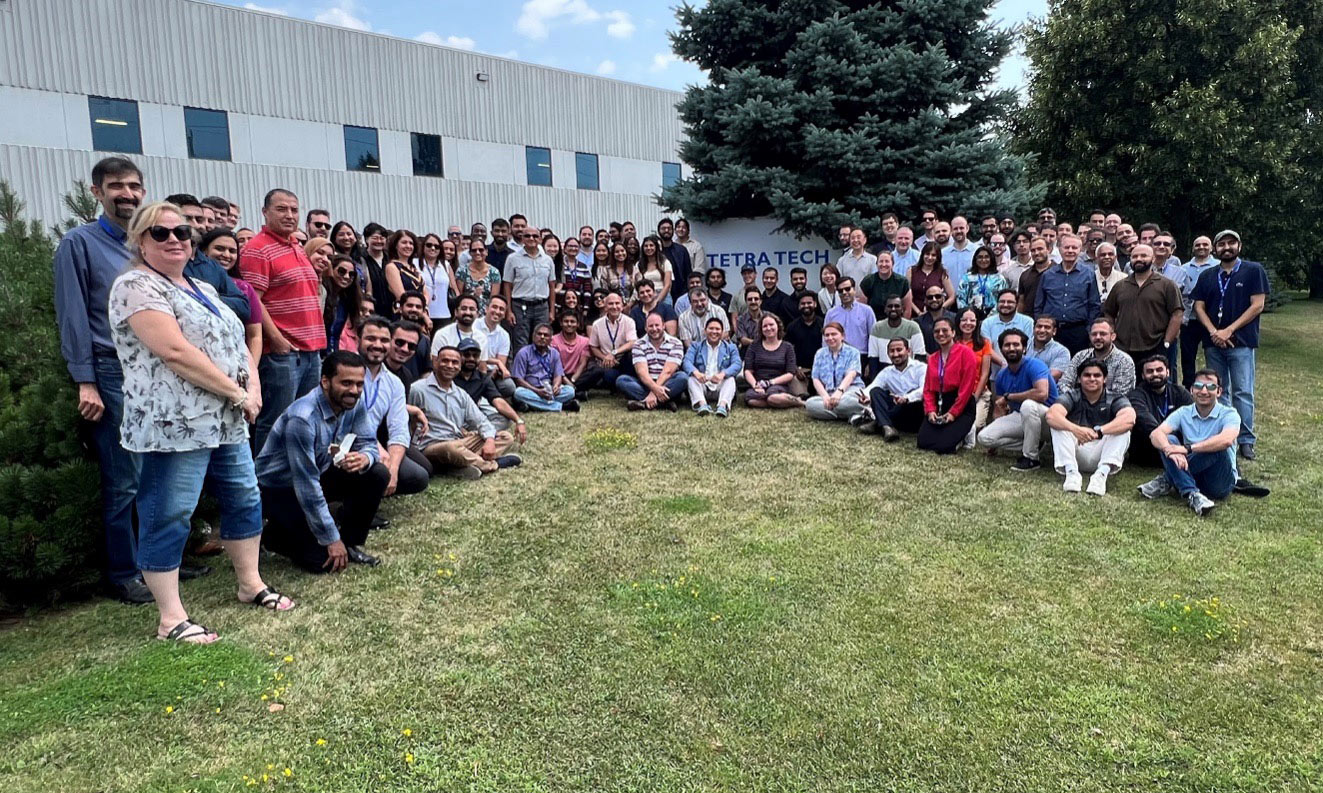 The Tetra Tech team outside their Pickering office on Squires Beach Road.
Clean Power, High Stakes: The Policy Tailwind Behind the Projects
Durham sits at the centre of Ontario’s energy transformation. Browne traces the arc: a province that retired coal, leaned into nuclear, and built an exceptionally clean, reliable baseload system.
That foundation now intersects with new demand from electrification — EVs, heat pumps, and AI data centres — driving a wave of refurbishment, isotope innovation, new large-scale builds and first‑of‑a‑kind small modular reactor (SMR) development, all happening in Durham. “It’s probably one of the most exciting times in nuclear that I’ve seen in my career,” Browne says.
Work That Matters
In Durham, Tetra Tech engineers are embedded in the province’s marquee clean‑energy initiatives. At Pickering, they’re supporting life‑extension work that sustains a major pillar of Ontario’s grid, and at Darlington, their team helped modify the plant to enable medical isotope production, leveraging the CANDU design’s unique strengths to shore up critical global supply.
Up at Bruce, the team is engaged in major component replacements that keep one of the world’s largest nuclear facilities moving forward. And at the edge of the next chapter, they’re leaning into SMRs — advancing early siting, due diligence, and partnerships that can carry designs across the finish line.
“In the next five years [nuclear] is going to be the space to watch,” Browne says, noting that firms like Tetra Tech bring the day‑to‑day problem‑solving experience of operating plants.
Talent Trained for CANDU
Durham’s higher‑education ecosystem is one of the Region’s many strategic advantages. “We actively advertise at schools like Ontario Tech” Browne explains. “Programs there have the ability to focus on Canadian nuclear technology, the CANDU technology specifically, which gives folks a bit of a leg up.”
Tetra Tech also recruits nationally and globally, then sharpens skills through internal training that maps electrical, mechanical, and civil disciplines onto nuclear applications, which accelerates time‑to‑impact when teams work minutes from operating stations.
The career runway is long: “You can have a career now in nuclear starting right out of school and probably be busy working for the majority of your career”, says Browne.
Quality of Life Is a Business Strategy
For Browne, Durham’s advantage isn’t only measured in megawatts. It’s in commutes that give people back their evenings, in amenities that build community, and in easy access to Toronto when needed. “You don’t have to go downtown to get all these different things to do. It’s that quality of life piece that folks might not realize,” he says, citing after‑work outings that range from axe throwing to virtual racing, and the convenience of catching a Raptors game via the GO train “within walking distance” of the office.
“Durham region is one of these places that people forget how much there is. It’s much more than [just] industrial space.”
That livability feeds retention and culture, which is critical when demand for experienced nuclear talent is surging. “All of our competitors are also always looking for space here in the Durham Region, Browne observes. “I think we’ll see a lot more growth here.”
Looking Ahead: Expansion Where the Work Is
Tetra Tech’s confidence in the Region shows up in square footage. “We’re probably looking at expanding our space here in Pickering and in the Durham Region with additional offices as we continue to hire,” Browne says. Being a short drive from Pickering and Darlington [plants]—and a train ride from downtown—lets Tetra Tech match project velocity with team capacity, without sacrificing quality of life.
In a sector like nuclear, which is defined by precision and reliability, geography is part of the strategy. In Durham Region, that strategy looks like clean‑energy projects delivered faster, teams trained sooner, and careers built closer to home.
Sign up to our Newsletter
Stay up to date on the Region's activities, events, programs and operations by subscribing to our eNewsletters.