
Cycling through opportunity: supporting rural business success in Durham Region

From spring through fall, cyclists travel Durham’s rural roads, experiencing the farmland, landscapes and small communities that make our region unique. While many are drawn by the opportunity to explore the countryside on two wheels, their visits represent more than a recreational outing. For farms and rural businesses, each stop by a cyclist is a chance to connect with new customers and create opportunities for growth.
To support cycling and encourage exploration of rural communities, Durham Region has developed a network of 13 rural on-road cycling loops and introduced new route markers. Together, these initiatives help riders discover the countryside while encouraging stops at local farms, markets, cafés and bike-friendly businesses along the way.
“Supporting farms and rural businesses is an important part of preserving the character of our rural communities,” says Sandra Austin, Commissioner of Community Growth and Economic Development for Durham Region. “Cycling helps bring people into those communities, creating business opportunities and encouraging a greater appreciation for Durham’s agricultural landscape.”
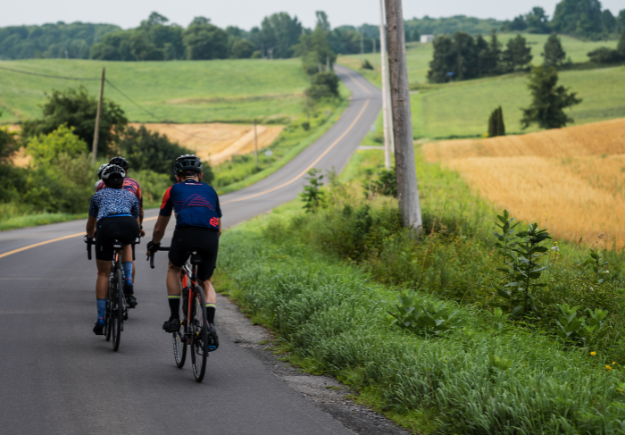
Cycling creates connections
The opportunity is growing. A recent survey by Ontario By Bike, a non-profit organization dedicated to developing and promoting cycling tourism across the province, found that 65 per cent of cyclists took three or more cycling day trips in 2025, while 52 per cent took at least one overnight trip that included cycling. The survey also found that cyclists spend money on attractions, activities and shopping in the places they visit.
At Brooks Farms in Mount Albert, General Manager Craig Douglas says the number of cyclists stopping at the farm has grown. “We have had cyclists coming to see us for the last few years,” says Douglas. “More have been coming since we were added to the loop. It's been a great addition for us.”
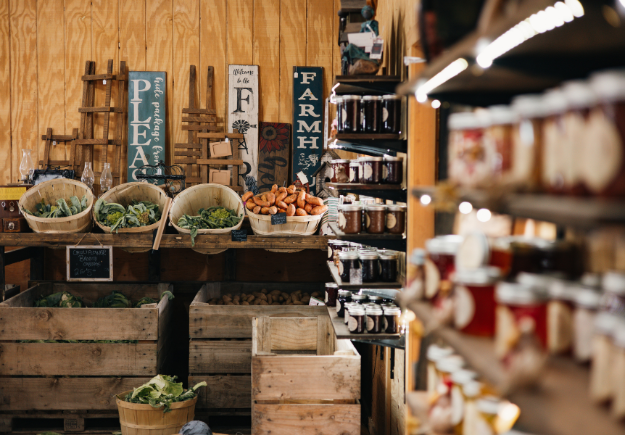
A cyclist stopping for fresh produce, a family activity or a coffee may seem like a small interaction, but across a season those visits can help support businesses and encourage repeat customers. Douglas believes building those connections takes time. “It may take a few cyclists passing by before they stop in. But once they do, you start to see more and more on a daily or weekly basis.”
For rural businesses like Brooks Farms, attracting cyclists is one of many ways to connect with visitors. Those experiences are part of the growing agritourism sector, where farms are finding new ways to diversify their income and strengthen their long-term sustainability. A March 2026 study by Agritourism Ontario found that agritourism generates an estimated $633 million in economic output for Ontario, contributes $313 million to the province’s gross domestic product and supports 8,734 jobs.
New opportunities on the farm
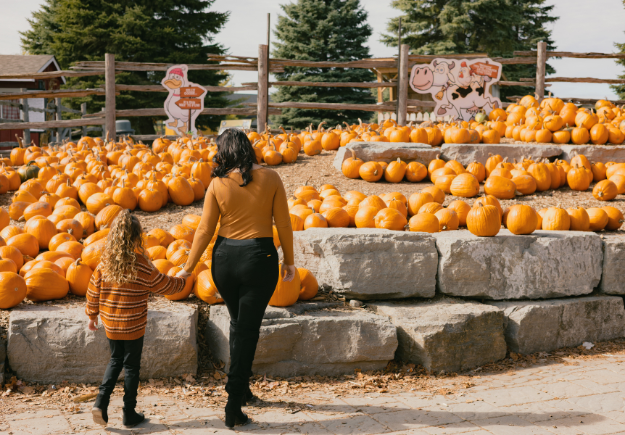
Brooks Farms has embraced that approach, creating new opportunities while maintaining a strong connection to its agricultural roots. Over the years, the family-owned operation has grown from a traditional farm into a destination that includes pick-your-own experiences, a farm market, school visits and seasonal festivals that attract visitors from across the region and the GTA. “As we have grown, there has always been a lot of talk about what we would like to try next,” says Douglas. More recently, the farm expanded into weddings and corporate events. “We were able to develop a great partnership with wedding planners. This allowed us to change the business model again.”
Beyond creating additional sources of income, agritourism can have benefits that ripple throughout rural communities. It creates local jobs, supports family farm succession, preserves rural landscapes through the reuse of existing farm buildings, and strengthens the connection between rural and urban residents.
Supporting rural success
Recognizing those benefits, Durham Region has worked with the Townships of Brock, Scugog and Uxbridge to help farmers and rural business owners pursue agriculture-related and on-farm diversified activities. The work resulted in a series of recommendations and an application toolkit that were endorsed by all three townships and are being implemented through local land use planning processes.
“Diversification gives farmers and rural businesses more tools to be successful,” says Austin. “By supporting opportunities for additional income and new business activities, we’re helping people continue doing what they do best, and strengthening the long-term viability of agriculture in Durham Region.”
At Brooks Farms, agriculture remains at the heart of the operation. Over the years, generations of families have returned to the farm. “We have people coming now with their own kids who used to come themselves as kids,” says Douglas. “Or we have families who came years ago with their kids to watch the pumpkin cannon shows and now bring their grandkids to watch them.”
For Douglas, those connections are a reminder that while the business has evolved, its foundation has not.
"Farming has, and always will be, part of this business," he says. "There is too much passion in farming for it not to be part of us."
Never miss a story. Subscribe to receive weekly updates at durham.ca/ThisWeek.
Sign up to our Newsletter
Stay up to date on the Region's activities, events, programs and operations by subscribing to our eNewsletters.