


Thanks to Durham OneNet, over 2,000 rural residents now have access to high-speed Internet


 Back to Search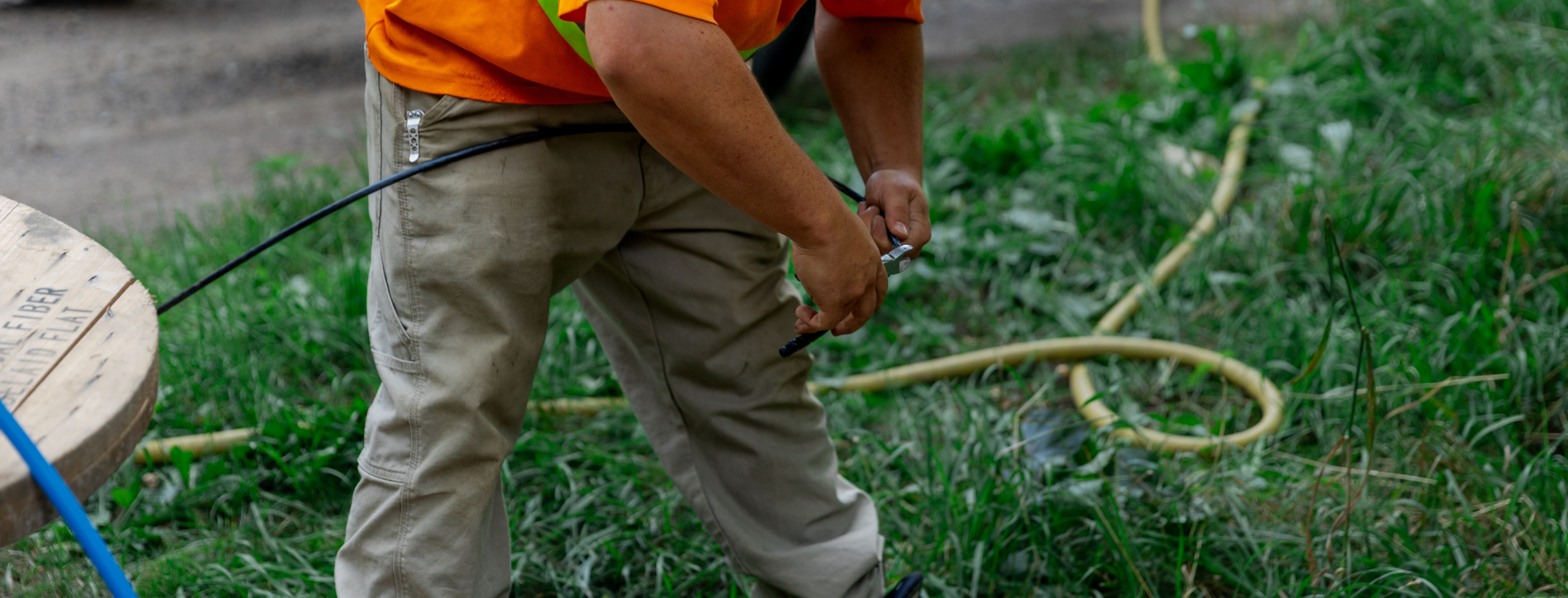
By Jennifer Foden
What do a farm in Brock Township, a family in Ajax and an innovative tech startup in downtown Oshawa all have in common? All three have equal access to reliable high-speed Internet.
However, this wasn’t always the case.
“In 2019, Regional Council endorsed the broadband strategy with the goal of bridging the digital divide in Durham,” says Riaz Razvi, Broadband Program Manager for Durham OneNet. “The initial focus was on supporting and enabling private sector Internet Service Providers to expand service in rural areas.”
Two years later, it became clear that the Region could take a more active role, Razvi says. So, they applied for infrastructure grants—and were successful. In February 2022, Durham OneNet was incorporated in order to design, build and operate a fibre-optic network across the region.
Today, with their partner Vianet, a telecom company, Durham OneNet has provided high-speed Internet access to more than 2,000 homes and businesses across 14 rural communities in Durham Region. “[These are] areas that would otherwise remain unconnected,” Razvi says.
This is just one way Durham Region—a municipality of more than 750,000 people and made up of eight local area municipalities including Ajax, Brock, Clarington, Oshawa, Pickering, Scugog, Uxbridge and Whitby—is building smarter and more inclusive communities for everyone. Thanks to initiatives like Durham OneNet, Durham Greener Homes and more, Durham Region has been recognized as one of the
top seven Intelligent Communities in the world for the fourth year in a row.
The benefit of Durham OneNet to residents is clear. “Improved connectivity is enhancing the overall well-being of our rural communities,” Razvi says. He further adds that not only can residents stay more closely connected with friends and family, students now have reliable access to online resources for their studies and remote work becomes a viable option for more people.
Further to that, it’ll help improve public safety for residents, too. “The network will play a vital role in public safety by connecting all paramedic, police and fire service locations,” Razvi says. With all Regional offices connected via high-speed communication lines, bandwidth limitations at remote sites will no longer be an issue. “Additionally, it’s also going to link all traffic intersections, helping to ensure smooth traffic flow and enable rapid response to any incidents.”
It’s also helping local businesses, particularly allowing them to compete and thrive in a digital economy. “We’ve truly levelled the playing field,” Razvi shares. “Both [a farm and a startup] can seamlessly connect with suppliers, customers and resources, empowering them to grow their businesses without digital barriers.”
And, it’s bringing more business to the area, which helps the economic development of Durham Region as a whole. “The availability and readiness of employment lands are key factors businesses consider when selecting a location. We believe that digital serviceability is equally critical in that decision-making process,” says Razvi. “Through this network, we’ve already enabled several high-profile businesses in Durham to launch operations faster than would have otherwise been possible… Our ongoing goal is to support the development of digitally enabled employment lands that attract investment and accelerate business growth across the region.”
It goes beyond infrastructure. “Digital communication touches every aspect of our daily lives,” Razvi says. “Fast, reliable broadband is no longer optional, it’s essential.” He adds: “The fibre-optic network we’ve built is a foundational piece of digital infrastructure, designed to support high-speed, secure communications for decades to come. But it’s more than just infrastructure, it’s an enabler. It connects our rural communities to the world.”
Never miss a story. Subscribe to receive weekly updates at durham.ca/ThisWeek.
Contact Us