Data sources
ED visit data are collected by the Canadian Institute for Health Information (CIHI) on a fiscal year basis. The main diagnostic code is the “main problem” (MP). A second set of codes, external cause codes (e-codes) are used to classify the environmental events, circumstances and conditions that cause an injury (i.e. pedestrian injured in a collision with a car or van). external cause codes are not used as a MP so need to be examined separately. Multiple external cause codes can exist for each visit. The counts shown for groupings of external cause codes (i.e. ICD-10 codes V01-V09) are actually counts of e-codes; not counts of ED visits.
ED visit data provide only a crude measure of the burden of pedestrian injuries. Data are influenced by factors that are unrelated to health status such as availability and accessibility of care, administrative policies and hospital procedures. This may influence comparisons between areas and over time.
For all indicators, data were analyzed by the residence of the patient, not where the ED visit occurred. Ontario residents treated outside of the province were excluded. Data were reported by calendar year, based on the year of the ED visit. This report includes ED visit indicators with relevance to public health programming.
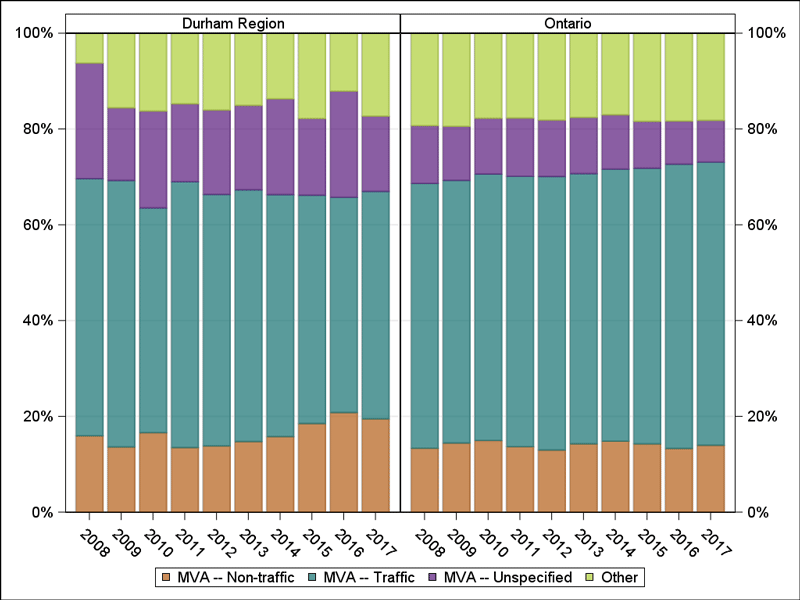
Pedestrian-related ED visits were selected using ICD-10-CA codes V01 – V09. ED visits that resulted in a transfer to another ambulatory care facility were included in the counts. In Figure 4, e-code categories were defined using the following codes: MVA-traffic V03 (.1), MVA-non-traffic V03 (.0), MVA-unspecified V03 (.9) and other.
Definitions
Figures and tables are provided for the following indicators:
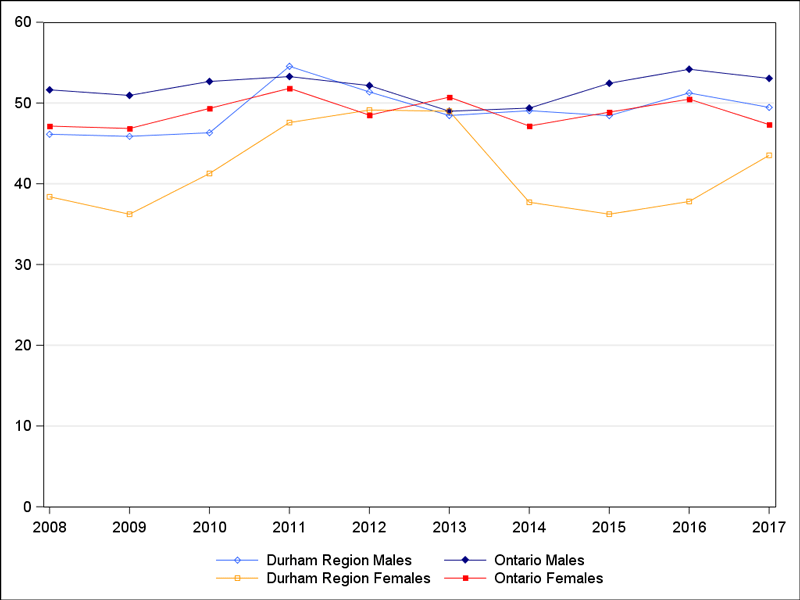
- Age-standardized pedestrian-related ED visit rates by sex
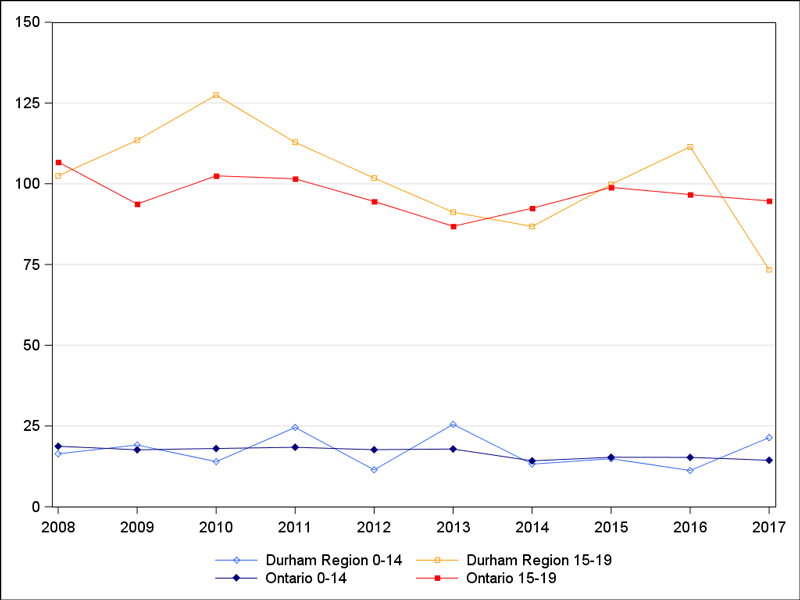
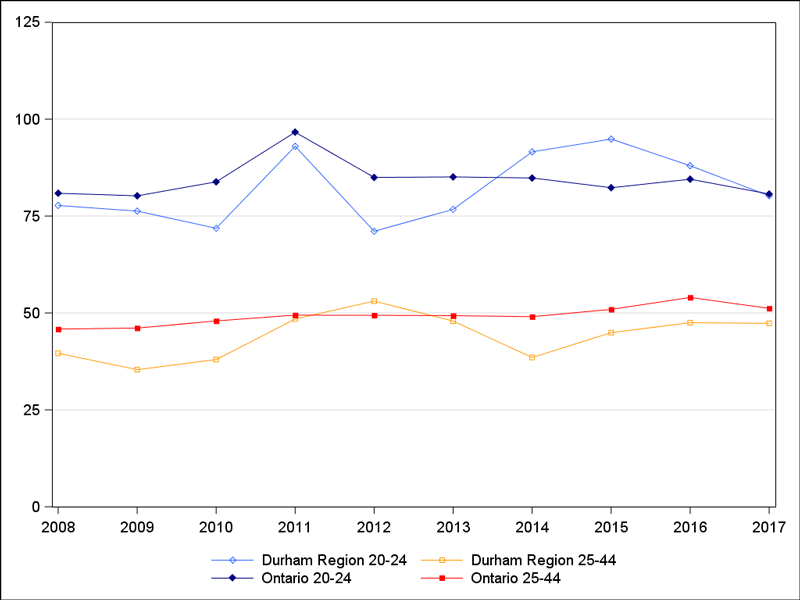
- Age-specific pedestrian-related ED visits rates in individuals aged 0 to 14 years, 15 to19 years, 20 to 24 years and 25 to 44 years
Age-standardized ED visit rate
An age-standardized ED visit rate is the number of ED visits per 100,000 that would occur if the population had the same age distribution as the 2011 Canadian population. This rate provides a single summary number that allows populations with different age compositions to be compared.
Age-specific ED visit rate
This rate is the total number of ED visits in a specified age group per 100,000 population in that age group. The numerator and denominator refer to the same age group.
For more information